

Materials.
Solid stock, milled in the shop. No veneer, no particleboard, no stain pretending to be a species it isn't. What you see on the surface goes all the way through the board.
What we mill most.
These four cover the majority of furniture work. They're stable, they age well, and they're available in the thicknesses a real table needs.
Used with intent, not for novelty.
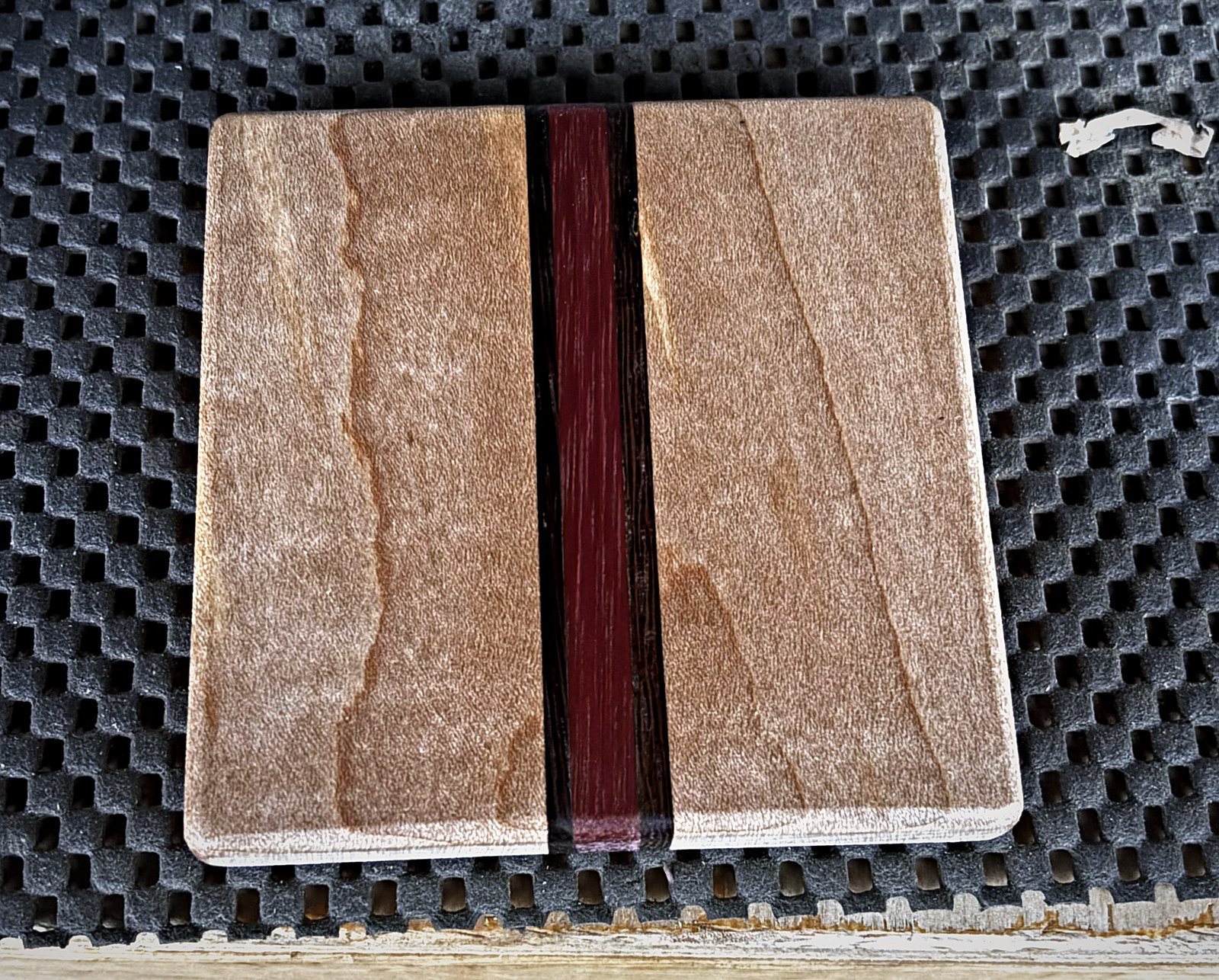
These show up as inlay, contrast strips, and small goods more often than as whole tabletops. They're harder, heavier, more expensive, and worth it in the right place.
 Finishes
The finish is a decision, not an afterthought.
Hardwax oil
Our default for furniture. It penetrates rather than sitting on top, so the surface still feels like wood. Repairable in place — a scratch can be sanded and re-oiled without stripping the whole piece. Needs re-oiling every year or two on hard-use surfaces.
Catalyzed hardwax
Used where a piece will meet standing water: bar tops, entry benches, anything near a sink. More resistant to rings and spills, slightly more film on the surface, and harder to spot-repair.
Food-safe oil & wax
Cutting boards and serving pieces only. Mineral oil and beeswax, no driers, no solvents. It's meant to be reapplied by you — that's a feature of the finish, not a shortcoming.
Epoxy fill
For voids, checks, and river pours. Tinted black by default, or matched to your room. We fill what needs filling for structure and leave the rest — a knot that isn't going anywhere is character, not a defect.
Where the wood comes from.
Domestic hardwoods come from regional mills and sawyers across western North Carolina and east Tennessee, including urban salvage — trees that came down in storms or development and would otherwise have been chipped. Asheville produces more of that than you'd think, and walnut from a felled yard tree has a history a kiln-dried board from a warehouse doesn't.
Exotics are bought in small quantities from established importers. We ask about origin and we buy less of them than a shop our size might, partly on cost and partly because the supply chains are harder to verify than we'd like.
Everything is kiln-dried and acclimated in the shop before milling. Wood that goes into a piece before it's ready is the single most common reason furniture fails later, and it's entirely preventable by waiting.
Not sure which species?
Tell us the room, the light, and how hard the piece will get used. Choosing the wood is part of the job, and it's a good conversation to have early.