

Steady work.
Steady lives.
Trade Up Recovery Woodworks is a purpose-driven furniture studio in Asheville, North Carolina. It exists to build good furniture and to be a place where the building itself does some good.
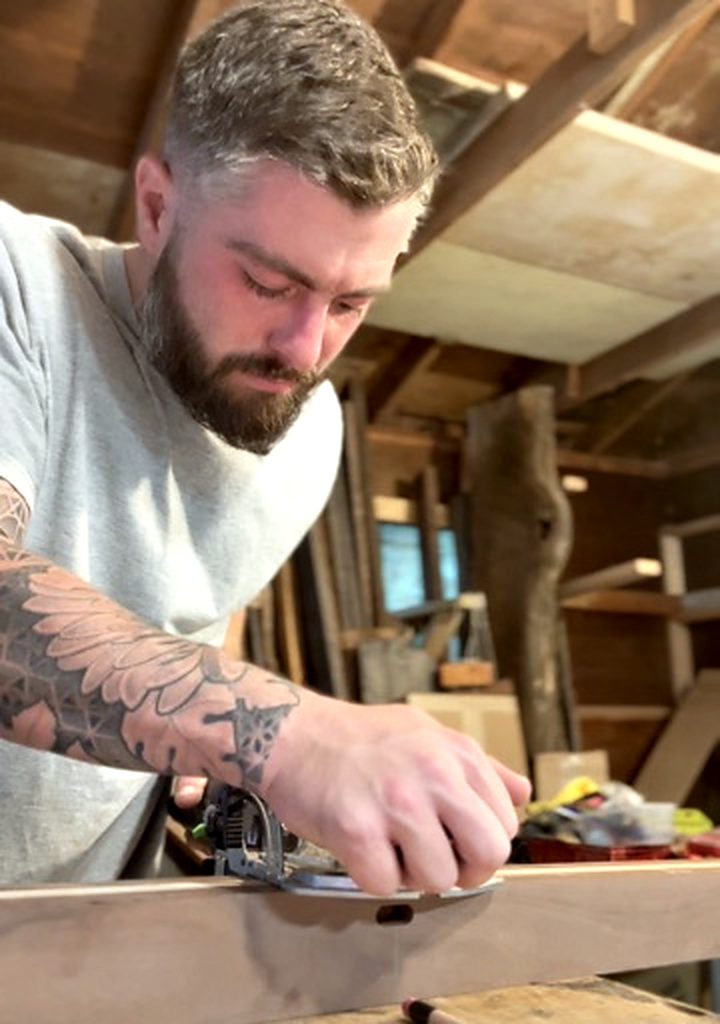
Austin Self · founder
The belief the shop was built on
Steady, meaningful work helps people build steady, meaningful lives. That's the whole thesis, and it isn't a metaphor.
Woodworking asks for presence. A board must be measured before it is cut. A joint has to be fitted with patience. A finish improves through preparation, repetition, and care. You cannot rush any of it and you cannot fake having done it — the wood shows the shortcut every time.
Trade Up creates a structured place where individuals in early recovery can develop practical woodworking skills, experience the satisfaction of completing real work, and reconnect through shared purpose. Participation varies by project. Every piece is made under a commitment to safety, material honesty, and lasting craftsmanship.
It's not a therapy program and it doesn't pretend to be. It's a workshop with real deadlines, real customers, and real standards. That turns out to be the point: the work has to matter for the practice of doing it well to matter.
What that means for what you buy
It means a person who is building a life built your table, and building it carefully was part of building the life. It means the shop takes safety and standards seriously because there's more riding on getting it right than a review score.
It also means we don't want the mission to be the reason you buy. Buy it because it's good furniture. The workshop is what your money makes possible, not an excuse for the piece to be anything less than excellent.
Four commitments.
These aren't marketing language. They're the things we'd want asked about if someone were checking whether we mean it.
Safety first, without exception
Machine training before machine access. No one runs a saw they haven't been walked through. In a shop where some people are managing early recovery alongside sharp tools, this is not negotiable and it costs us time we're glad to spend.
Material honesty
Solid wood is called solid wood. Veneer would be called veneer. If a piece has an epoxy fill, a repair, or sapwood you might not expect, it's in the photos and it's in the description before you pay.
Dignity over story
We don't put anyone's recovery on display to sell furniture. No names, no before-and-afters, no personal histories in the marketing. People here are woodworkers. That's the identity the shop is for.
Fix what we get wrong
We've reformulated a finish because of one customer's review about water rings, and replaced sets for free while we did it. That's the standard: when something fails, it gets fixed and the process gets changed.
Why here
Western North Carolina has a deep craft tradition and a serious substance use problem, and both of those facts shaped this shop. There's a regional supply of good hardwood, a customer base that understands why handmade costs more, and a real need for places where people rebuilding their lives can do work that's worth doing.
The shop buys from mills and sawyers around western North Carolina and east Tennessee, including trees that came down in storms and would otherwise have been chipped. A walnut slab from a felled Asheville yard tree has a history that a warehouse board doesn't, and we'd rather build with that.
Working with us
If you're in the area and want to see the shop, ask. If you're a mill, a sawyer, or someone with a felled hardwood tree, we'd like to hear from you. And if you work in recovery services locally and want to talk about how participation works, that conversation is always open.